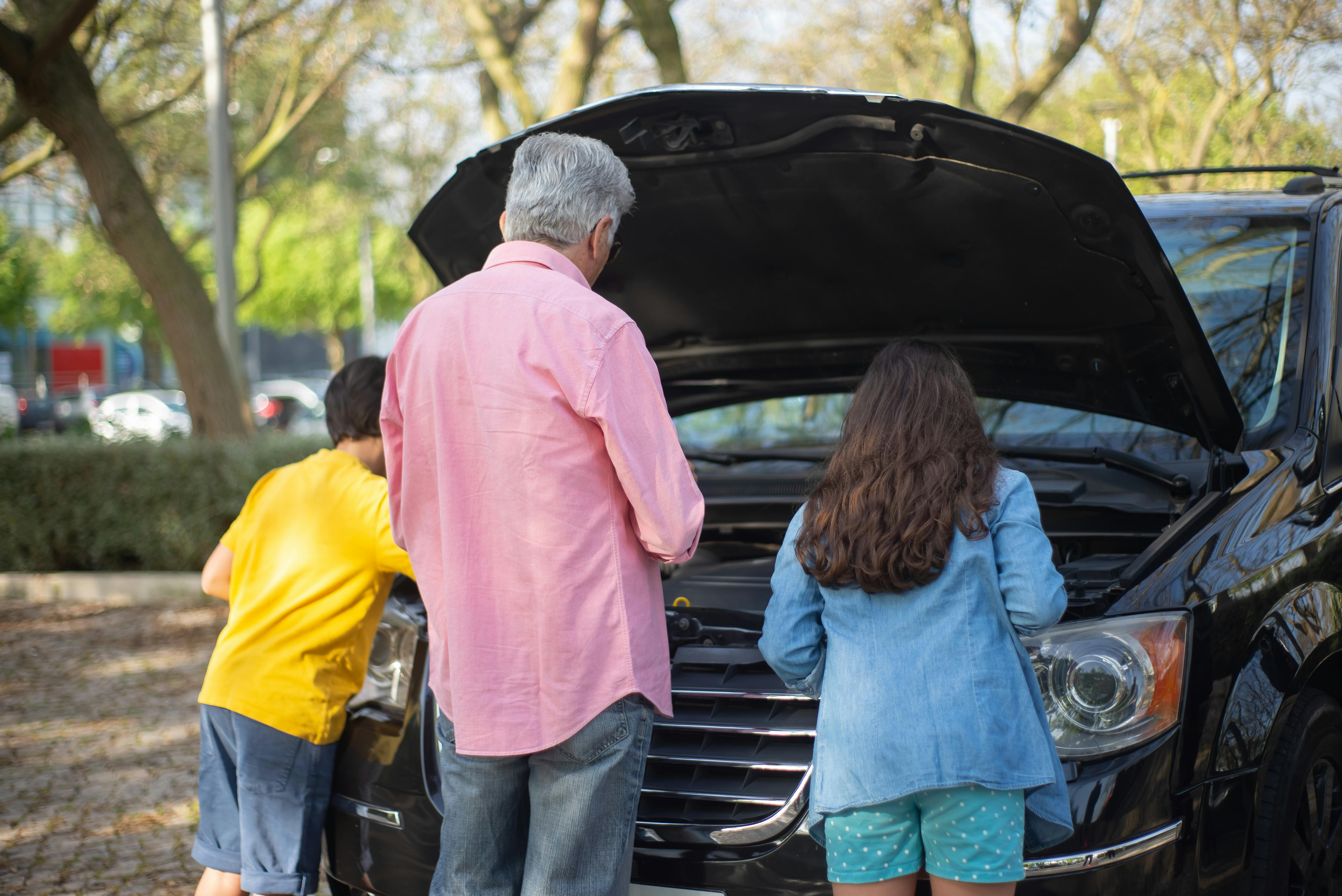
Image Credit: Pexels
A family road trip puts extra demands on your car, especially when it’s carrying passengers, luggage and entertainment for the kids. Basic checks completed several days before departure can uncover worn parts, low fluids and other problems while there’s still time to fix them. Keep your car’s handbook nearby as you work, since it lists the correct specifications and service intervals for your model. This road trip checklist also offers a useful overview of tasks to complete before leaving.
Inspect Crucial Fluid Levels
Check the engine oil on level ground when the engine is cool. Remove the dipstick, wipe it clean, insert it fully and check that the oil sits between the minimum and maximum marks. Look at the coolant reservoir, brake fluid and windscreen washer fluid as well, without opening a hot cooling system.
A sudden drop may point to a leak that needs professional attention. Puddles under the car, an unusual smell or a dashboard warning light also call for investigation. If a vehicle needs attention before a trip but getting to a workshop is inconvenient, a mobile mechanic may be able to inspect or service it at home or another suitable location.
Assess Tyre Tread and Pressures
Measure tyre pressures when the tyres are cold, using the figures on the driver’s door placard or in the handbook. The number printed on the tyre sidewall is generally its maximum rating, not the recommended everyday pressure. Remember to inspect the spare if your car carries one.
Run your eyes and hands over each tyre to find cuts, bulges, cracks or objects lodged in the tread. Australian passenger vehicle tyres need at least 1.5 mm of tread depth, though replacing them earlier may improve wet-weather performance. The practical tyre safety checklist covers pressure, tread condition and signs of damage. Uneven wear may indicate an alignment or suspension issue that should be checked before a long drive.
Schedule Driveway Vehicle Checks
Set aside 20 minutes during daylight to test the parts you’ll rely on throughout the trip. Ask another adult to confirm that the headlights, indicators, brake lights and reversing lights work. Then check the horn, wipers, air conditioning and seatbelts, including child restraint fittings.
Start the engine and listen for rattling, squealing or rough idling. On a short local drive, notice any steering vibration, delayed braking or pulling to one side. Book repairs if something feels different from normal, and avoid leaving the inspection until departure morning. For a broader year-round routine, this guide to regular car maintenance explains which checks owners can handle and which jobs need a qualified professional.
Pack Essential Roadside Safety Gear
Store roadside supplies where an adult can reach them without unloading every suitcase. A practical kit includes a first-aid kit, torch with spare batteries, reflective vest, warning triangle, phone charging cable, drinking water and basic sun protection. Add any vehicle-specific items listed in the handbook, plus the locking wheel nut key if your wheels require one.
Save roadside assistance details and key family contacts in each adult’s phone. Offline maps are useful on routes with patchy reception, while a paper note containing accommodation addresses can help if a phone loses power. Before leaving, confirm that the spare tyre, jack and wheel brace are present and suitable for the car. Never attempt a roadside repair where traffic makes the location unsafe.
Complete the final checks the evening before departure, then load the car without blocking the driver’s rear view. Once everyone is buckled in and the tyres are correctly inflated, the first stop can be about breakfast or stretching young legs instead of an avoidable vehicle problem.